Welcome to Our Website!

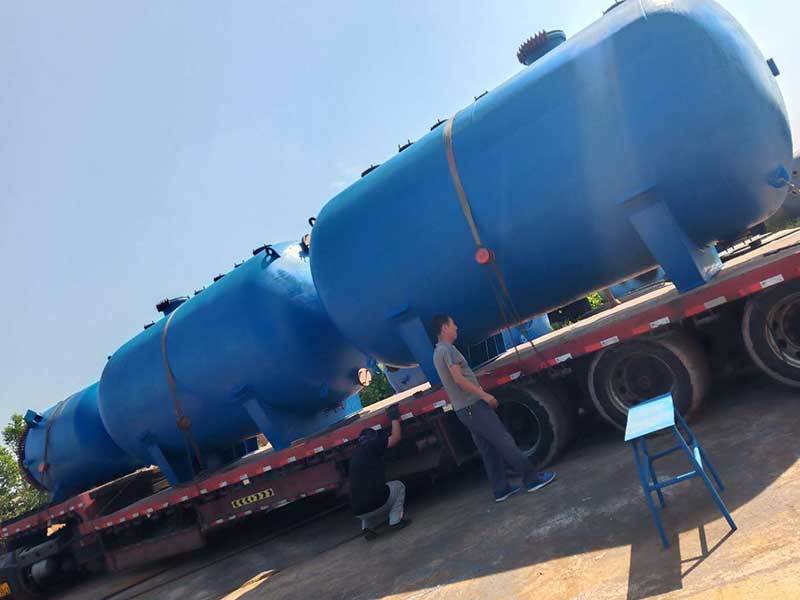
The role of glass-lined reactor filler
The filling of the glass-lined reactor must be carried out correctly, so as to better ensure the normal operation of the reactor equipment. Then again, what kind of effect does the packing have on the reactor equipment? We together look.
1. The passing capacity of the packing: the ultimate passing capacity of the packing is the gas velocity of the empty tower at the flooding point.
2, the efficiency of the filler: the factors that affect the efficiency are more complicated, but it is more reliable to design according to the actual test value.
3. The material of the filler: firstly, it should be determined according to the corrosiveness of the materials processed by the glass-lined reactor and the operating temperature.
4. The pressure drop of the packing: the power consumption mainly depends on the total pressure drop of the whole tower in the gas phase.
5. Packing size: The appropriate ratio of the diameter to the outer diameter of the packing has a lower limit. When the diameter ratio is lower than this value, it is difficult to predict their performance.
So from the above content, it can be seen that the filler is a very critical operation for the glass-lined reactor, which can help you better operate and use the equipment. So everyone must learn more about other information about the device, so as to better master the use of the device.
17
2021
/
12
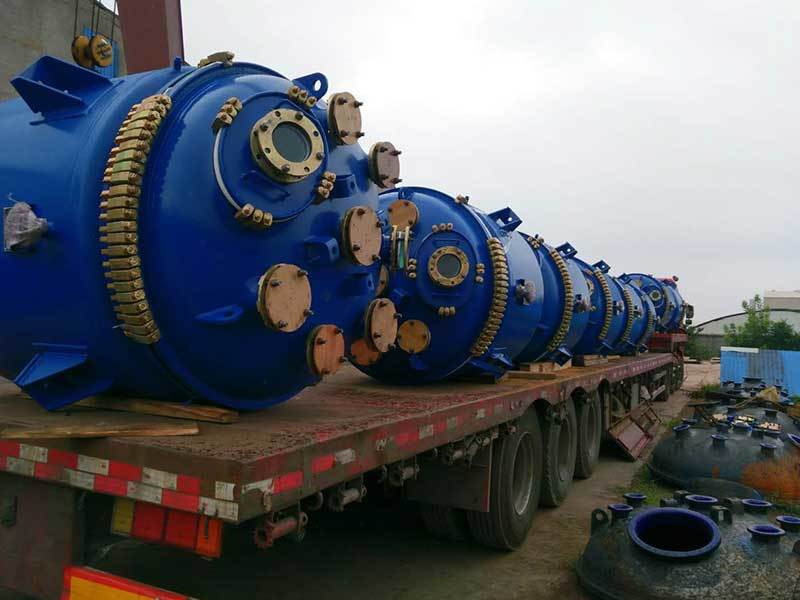
Design requirements of impeller agitator for glass-lined reactor
The blades of the glass-lined impeller stirrer should be curved blades, and the sweep angle is equal to 50°: this is a very important dimension. The sweep angle of 50° is the data summarized by a lot of experiments and time. When the speed of the impeller stirrer of the glass-lined reactor is 130r/min, it can make the stirring consume less power and produce greater centrifugation and discharge capacity for the liquid, which can strengthen the volume circulation of the liquid in the glass-lined reactor vessel. This is the conclusion drawn after a lot of experiments. However, because the agitator will produce centrifugal force on the liquid, when there is no baffle in the glass-lined reactor, the liquid in the glass-lined reactor will form a vortex, causing the liquid to rotate as a whole around the wall of the reactor, which will seriously affect the mass transfer. Effect. Therefore, when you use an impeller-type glass-lined agitator for your glass-lined reactor, you must consider the corresponding baffle and install it.
The tilt angle of the glass-lined reactor impeller glass-lined agitator is 15°: the tilt angle of 15° is an important geometric dimension, which enables the glass-lined impeller agitator to have a strong discharge capacity for materials when the blades are rotating. Strengthen the overall circulation of materials. The impeller type agitator rotates, and the blade throws the fluid towards the tank wall in a direction of 15°. Under the action of the reaction force, a split is formed. Most of the liquid flows upwards along the glass-lined reactor tank wall and reaches the top of the range of action. Converge between the shafts, and then flow downwards to form a main circulating flow; while a small part of the fluid flows downwards along the wall of the glass-lined reaction tank, reaches the bottom of the tank and then merges upwards between the shafts to form a small circulating flow. This is the flow pattern to be produced by the impeller stirrer of the glass-lined reactor.
If the tilt angle changes (too large or too small), the flow pattern will change, that is, the height of the stirring blade from the bottom of the glass-lined reactor should be adjusted, otherwise the reaction efficiency will be affected and the design and process objectives will not be achieved.
17
2021
/
12
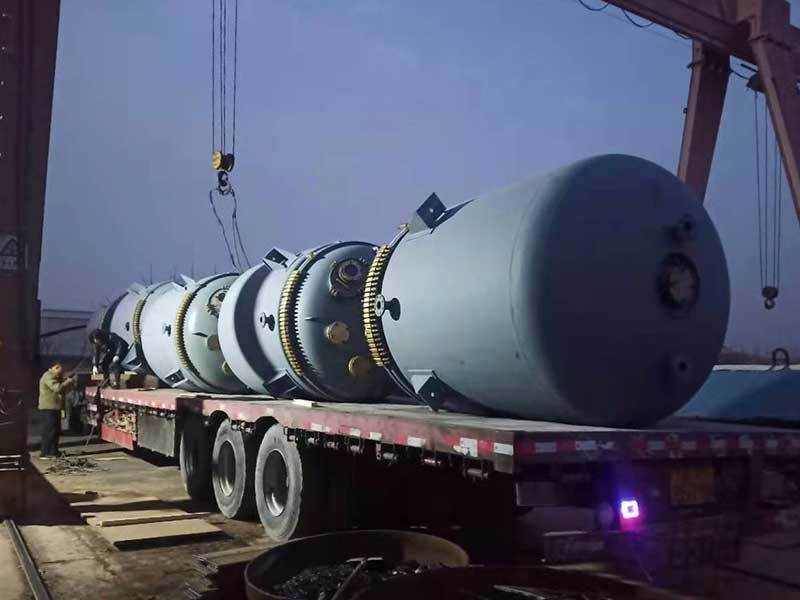
What should be paid attention to in the maintenance of glass lined reactor
The maintenance of the glass-lined reactor is indispensable when we use it, which can also help keep it in a good condition, but for it, in addition to daily maintenance, we also need to do maintenance, but if we master it The main points can be operated well.
1. The upper part of the glass-lined reactor high-temperature and high-speed magnetic stirrer has an oil injection hole, which is set to inject grease into the bearing when it is stopped.
It can be used only after the pressure in the glass-lined reactor is relieved. Add 30-50CC each time and inject it with a syringe.
2. When repairing the magnetic stirrer of the glass-lined reactor, there is no need to open the cover, just loosen the nut connected with the cover.
1. When disassembling the glass-lined reactor, try to avoid impurities such as iron and magnetic materials from entering the gap between the inner and outer magnetic steel.
2, to ensure the concentricity of the magnetic steel inside and outside the glass-lined reactor and the sealing cover. When installing, tighten the bolts evenly and symmetrically, and tighten the bolts in 2 to 3 times to prevent the bolts from going up and damaging the gasket and affecting the sealing effect.
3. Before disassembling, the glass-lined reactor should be drained of the reaction materials in the reactor and cleaned with a gas-liquid medium that is harmless to the human body.
Four. Regularly check the swing of the stirring shaft of the lower glass-lined reactor. If the swing is found to be large, disassemble it immediately and replace the bearing and sleeve according to the structure drawing. The composite shaft sleeve or graphite shaft sleeve used in the magnetic stirrer has a design life of 1 to 2 years. To ensure the normal operation of the equipment, it is recommended to replace it once a year.
The overhaul of the glass-lined reactor is an indispensable step in our use. Only by regular overhaul can we understand the use of our equipment, and can also check out its problems in time to facilitate maintenance so as not to affect our work.
17
2021
/
12
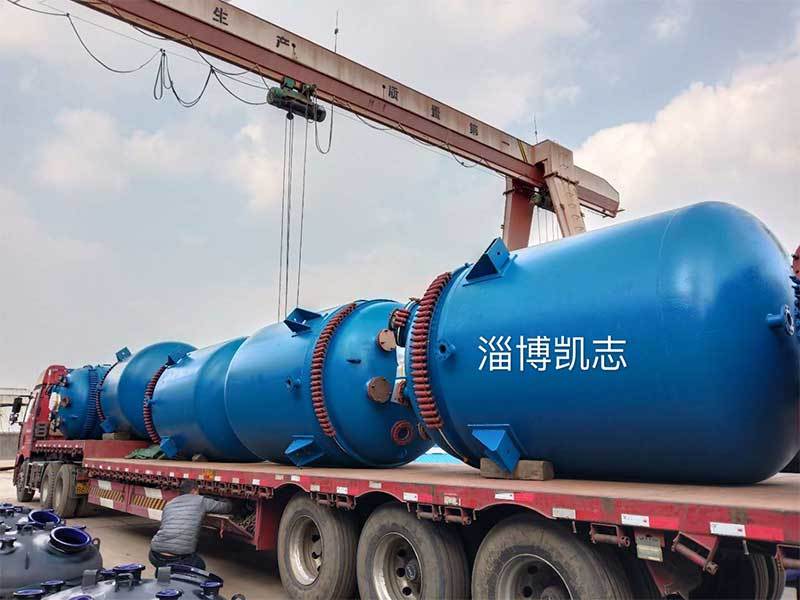
The chemical reaction when the enamel reactor is working
The outer layer and steam pipes of the enamel reactor are covered with asbestos or other materials that are not easy to transfer heat as an insulating layer to reduce energy consumption and avoid scalding the operator. A gasket should be added between the kettle body and the kettle cover to seal, and the gland should be sealed when installing the stirrer.
Enamel reaction kettles are generally commonly used enamel kettles, that is, the inner wall of the kettle is coated with acid and alkali-resistant enamel, which has the chemical stability of glass and the pressure-bearing capacity of steel containers. The lining is a glaze made of silica as the main body and a variety of other elements. After repeated spraying and sintering, the enamel layer is attached to the surface of the metal substrate. It can resist the removal of hydrofluoric acid and strong alkalis. Corrosion of various concentrations of organic acids, inorganic acids, organic solvents and weak alkalis.
The negative pressure in the enamel reactor is lower than 1O1kPa. There is a hole at the bottom of the jacket, which is connected to the cold water pipe, and can also drain the jacket to neutralize excess steam and cooling water. There are 1-2 holes in the upper part of the jacket to connect the steam pipe and discharge the cooling water, so that the heat can be fully utilized and the heat released by the reaction can be taken away, avoiding the temperature of the reaction liquid from being too high, and effectively controlling the exothermic reaction . There is only one discharge port on the oval bottom. The spherical top cover is provided with a feeding port or a manhole (the large kettle has a population), an observation hole, a sampling hole, a cooling reflux device port, a temperature measuring device port, and a hole for installing agitator.
17
2021
/
12
CONTACT US
Email: glasslined@kztbl.com
Email: kaizhi@kztbl.com
WhatsApp: 8618553377222
WhatsApp: 8613953387999
Address: Middle Section of Yangmeng Road, Economic Development Zone, Zibo City, Shandong Province, China


GET A FREE QUOTE